 |
|
|
|
|
||||||||||||||||||||||||||||||||||||||||||||||||||||||||||||||||||||||||||||||||||||||||||||||||||||||||||||||||||||||||||||||||||||||||||||||||||||||||||||||||||||||||||||||||||||||||||||||||||||||||||||||||||||||||||||||||||||||||||||||||||||||||||||||||||||||||||||||||||||||||||||||

|
|
|
SCIENTIFIC PROGRAMS AND ACTIVITIES |
|
||||||||||||||||||||||||||||||||||||||||||||||||||||||||||||||||||||||||||||||||||||||||||||||||||||||||||||||||||||||||||||||||||||||||||||||||||||||||||||||||||||||||||||||||||||||||||||||||||||||||||||||||||||||||||||||||||||||||||||||||||||||||||||||||||||||||||||||||||||||||||||||
| April 27, 2026 |
|
|||||||||||||||||||||||||||||||||||||||||||||||||||||||||||||||||||||||||||||||||||||||||||||||||||||||||||||||||||||||||||||||||||||||||||||||||||||||||||||||||||||||||||||||||||||||||||||||||||||||||||||||||||||||||||||||||||||||||||||||||||||||||||||||||||||||||||||||||||||||||||||||||
|
|
|||||||||||||||||||||||||||||||||||||||||||||||||||||||||||||||||||||||||||||||||||||||||||||||||||||||||||||||||||||||||||||||||||||||||||||||||||||||||||||||||||||||||||||||||||||||||||||||||||||||||||||||||||||||||||||||||||||||||||||||||||||||||||||||||||||||||||||||||||||||||||||||||




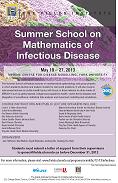
Course instructors and public lecture speakers include: |
||
| Linda J. S. Allen (Texas Tech) Julien Arino (Manitoba) Fred Brauer (British Columbia) Carlos Castillo-Chavez (Arizona State) Odo Diekmann (Utrecht) David Fisman (Toronto) Jane Heffernan (York) Ying-Hen Hsieh (China Medical University) |
Mirjam Kretzschmar (University Medical Centre
Utrechtl) Neal Madras (York Univeristy) Eduardo Massad (University of Sao Paulo) Seyed M. Moghadas (York), Beate Sander (Public Health Ontario) Pauline van den Driessche (Victoria) James Watmough (New Brunswick) Ping Yan (Public Health Agency of Canada) Huaiping Zhu (York) |
|
Public Lectures
 |
 |
 |
|
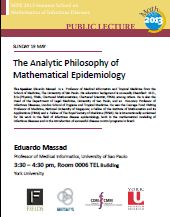
May 19, 2013
Eduardo Massad Professor of Medical Informatics, University of Sao Paulo The Analytic Philosophy of Mathematical Epidemiology 3:30 – 4:30 pm, Room 0006 TEL Building, York University |
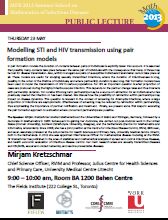
May 23, 2013
Mirjam Kretzschmar Chief Science Officer, RVIM and Professor, Julius Centre for Health Sciences and Primary Care, University Medical Centre Utrecht Modelling STI and HIV transmission using pair formation models 9:00 – 10:00 am, Room BA 1190 Bahen Centre (map to Bahen) The Fields Institute (222 College St., Toronto) |
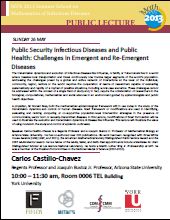
May 26, 2013
Carlos Castillo-Chavez Regents Professor and Joaquin Bustoz Jr. Professor, Arizona State University Public Security Infectious Diseases and Public Health: Challenges in Emergent and Re-Emergent Diseases 10:00 – 11:30 am, Room 0006 TEL Building |
Registration
Fees: Faculty/Researcher: $600, Students $100.
Outline of the draft program
The program consists of:1. coordinated sequences of lectures to cover the basic concepts and techniques in disease modelling;
2. public lectures for detailed case studies of specific diseases and public health issues. These lectures are indeed for the general public, specially for those not necessarily specialized in the field, so students of the summer school can learn how to communicate mathematical results effectively with the public;
3. pre-assigned student group projects, identified in advance with partner organizations;
4. student presentations.
Tentative Schedule (check with www.cdm.yorku.ca for updated information)
May 19: Introduction to the school; Basic epidemiology; Basic deterministic SIR and SIS models; Simple case study.
Reception, plus each student gives a short presentation of their research work and interests.
May 20: Stochastic models; Calculation of the basic reproduction number. Presentation of projects, Tour of labs and software.May 21: Metapopulation models; Network models.
Form groups and discuss projects.
May 22: Parameter estimation; Statistics and public health data.
Group projects.May 23: Public lectures; Structured population models for infectious diseases.
Tour of the Fields Institute.
May 24: Case study: agent-based simulation and influenza;
Case-study: disease spread and global travel.
Group project preliminary presentation, group discussions.
May 25: Cost-effectiveness analysis;
Public lecture;
Group discussions.May 26: Case-study: Vector-borne disease modeling;
Introduction to in-host modeling;
Public lectureMay 27: Group presentations.
Participants as of May 10, 2013
| Full Name | University/Affiliation | |
| Adebayo, Olasehinde | Federal University of Technology Akure | |
| Almocera, Alexis Erich | University of the Philippines | |
| Althubyani, Mohammed | College of Physical and Engineering Science, University of Guelph | |
| Arruda, Andreia | University of Guelph | |
| Asaduzzaman, S M | University of Victoria | |
| Atique, Suleman | COMSATS Institute of Information Technology,Islamabad | |
| Awad, Enas | ||
| Balendran, Prathayana | York University | |
| Bittles, Tara | ||
| Champredon, David | McMaster University | |
| Chen, Longbin | York University | |
| Cheuk, Eve | National Collaborating Centre for Infectious Diseases | |
| Clamer, Valentina | University of Trento | |
| de Graaf, Willem Frederik | Utrecht University | |
| DePiero, Regene | University of Wyoming | |
| Donato, Lorrianne | York University | |
| Dorratoltaj, Narges | Virginia Tech | |
| Dutta, Tripti | York University | |
| Fagerstrom, Emily | State University of New York at Buffalo | |
| Falzon, Laura | Ontario Veterinary College | |
| Fang, Jian | York University | |
| Farris, Rachel | University of Wyoming | |
| Fortin, Marie-Josée | University of Toronto | |
| Haroon, Humaira | York University | |
| Harpur, Brock | York University | |
| Hirji, Mustafa | University of Toronto | |
| Huang, Longhua | York University | |
| Hughes, Josie | University of Toronto | |
| Jaberi-Douraki, Majid | McGill University | |
| Jelveh, Nazli | Simon Fraser University | |
| Kamran Habibkhani, Hootan | University of Toronto | |
| Keegan, Lindsay | McMaster University | |
| Khajanchi, Subhas | ||
| Khan, Maryam | Northeastern Illinois University | |
| Khan, Maryam | University of Szeged | |
| Konini, Angjelina | York University | |
| Konini, Silva | York University | |
| Kuhajda, David | University of Akron | |
| Lachowsky, Nathan | University of Guelph | |
| Lemos-Costa, Paula | Bioscience Institute - University of Sao Paulo | |
| Leung, KaYin | Utrecht University | |
| Li, Xuan | ||
| Liao, Laura | University of British Columbia | |
| Limbu, Chandra | York University | |
| Magpantay, Felicia Maria G. |
York University | |
| Marinelli, Alessio | University of Trento | |
| Meadows, Shannon | University of Guelph | |
| Moschini, Pamela | University of Trento | |
| Munganga, Justin MW | University of South Africa | |
| Munther, Daniel | York University | |
| Murthy, Srinivas | Hospital for Sick Children | |
| Nah, Kyeongah | Bolyai Institute | |
| Niyukuri, Fidele | Université de Montréal | |
| Norton, Jacob | North Carolina State University | |
| Numfor, Eric | University of Tennessee, Knoxville | |
| Pal, Samares | University of Kalyani | |
| Pieper, Laura | University of Guelph | |
| Plazzotta, Giacomo | Imperial College London | |
| Pritsker, Asya | Pennsylvania State University | |
| Rahman, Ashrafur | University of Western Ontario | |
| Rilkoff, Heather | ||
| Rudnick, Wallis | University of Toronto | |
| Saksida, Sonja | BC Centre for Aquatic Health Sciences | |
| Samarasinghe, Chathuri | Oakland University | |
| Schultz, Lance | University of Guelph | |
| Schwandt, Michael | University of Toronto | |
| Sharmin, Sifat | Australian National University | |
| Shu, Hongying | University of New Brunswick | |
| Sigdel, Ram | Wilfrid Laurier University | |
| Singh Kohli, Ikjyot | ||
| Sriskandarajah, Sujanthan | ||
| Teslya, Alexandra | McMaster University | |
| Thi Tu, Hong Anh | University of Toronto | |
| Tupper-Ring, Laura | Simon Fraser University | |
| van den Hoogen, Josée | St. Francis Xavier University | |
| Varughese, Betsy | University of Alberta | |
| Watts, Alexander | University of Toronto | |
| Westers, Trisha | University of Guelph, Ontario Veterinary College | |
| Wong, Kester | Nanyang Technological University/ National Institute of Education | |
| Wu, Xiaotian | Western University | |
| Xiao, Yanyu | York University | |
| Yu, Don | York University | |